7 Cold-Weather Walking Essentials for Dogs

My neighbor's vet told her something that stuck with me: frostbite on a dog's ear tips can show up after as little as 20 minutes in the wrong conditions.
Twenty minutes, shorter than most people's lunch break, and yet plenty of us still walk out the door in January thinking "eh, fur's fur."
It isn't, though. Winter walks bring problems summer walks just don't have. Colder air, wetter fur, ice hiding under slush, road salt eating at paw pads, and mornings so dark you can barely see your own dog three feet ahead.
None of that means canceling the walk. It just means building in a few habits, most of which take barely any extra time once they're routine.
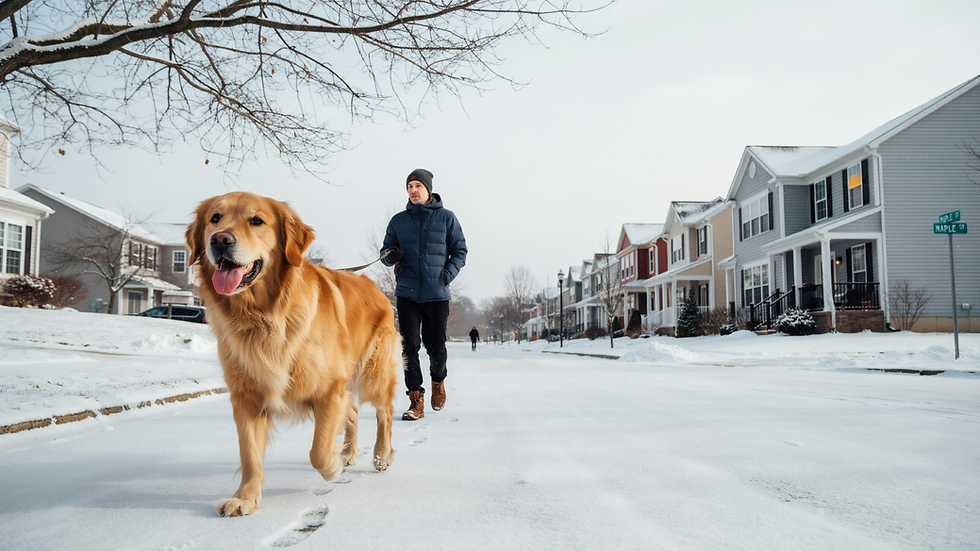
1. Check The Forecast First
Here's a mistake I see constantly: someone glances at the temperature, decides "not that bad," and heads out without thinking about who's actually on the other end of the leash. A Husky and a Chihuahua do not experience 30 degrees the same way.
Double-coated dogs handle cold stretches pretty well. Thin-coated dogs, tiny dogs, older dogs, puppies, they run cold fast, and it shows up as shivering, dragging feet, or flat-out refusing to keep walking.
Wind chill matters more than the raw number too. A still 25 degrees and a windy 25 degrees are basically two different climates.
It depends a lot on coat type and age, honestly, more than on the thermometer alone. So before the leash comes out, actually think about your dog, not "dogs" as some generic category.
2. Add A Warm Layer
A properly fitted winter coat for dogs isn't just for looks, even though, sure, some of them are objectively adorable. It blocks wind, holds body heat in, and keeps damp air off skin that's already working overtime to stay warm.
Fit trips people up more than anything else. Too tight, and the shoulders can't move right, so the dog walks stiff and awkward. Too loose and cold air sneaks in exactly where you didn't want it to.
What you actually want covers the chest and belly, since that's where a lot of heat leaks out, while leaving the legs totally free to move.
I've watched small dogs go from tolerating five minutes outside to happily doing twenty, just from switching to a coat that fits right instead of one fighting them the whole walk.
3. Guard The Paws Against Salt And Ice
Paw pads look tough. They are not invincible. Cold pavement pulls heat straight out through contact; ice can split pads that are already a little dry, and de-icing salt sits on sidewalks all winter, acting like a low-grade skin irritant.
Dogs lick their paws after walks pretty often, which seems minor until you realize they're swallowing whatever salt or chemical residue was stuck there. That's on top of the drying and cracking that the salt causes directly.
This is where winter paw protection genuinely earns its place, whether that means boots or a protective wax rubbed in beforehand. First walk in boots? Expect a weird, stiff-legged march, like the dog forgot how feet work. Give it a week, maybe two. Most stop caring after that.
4. Make Yourself Seen
Darkness comes fast in winter. Six a.m. walks and five p.m. walks both turn into flashlight walks before most people adjust their routine to match. A reflective collar costs almost nothing. A clip-on light costs a little more and does a lot more.
Got any traffic on your route? Then this isn't optional anymore. A driver can't slow down for a dog they never saw coming. Takes two seconds to clip on, and after the first week, you won't even remember doing it, same as grabbing your keys.
5. Bring A Towel For Quick Clean-Ups
One towel. By the door. Not in the closet, not in the laundry room, right by the door where you'll actually grab it.
Because a wet dog stays cold. Slush on the paws, grime up the legs, a belly that dripped through three puddles on the way home, none of it dries fast on its own, and it undoes half of what the coat and boots were doing in the first place.
Wipe the paws, wipe the legs, get the belly too. Takes under a minute. Salt comes off before tongues get to it, and everything actually dries instead of sitting cold against the skin for the rest of the night.
6. Shorten Walks When It Gets Rough
That said, nobody wins anything by dragging a miserable dog around the block. Shivering, one paw lifting off the ground, slowing way down, just stopping and staring at you, those aren't stubbornness. They're your dog telling you it's time to turn around.
Shorter walks, more often, tend to work better than one long slog on the genuinely brutal days. There's no prize for finishing the usual loop.
7. Do A Paw Check When You Get Home
Last habit, and it's a quick one: check the paws every time you walk back in. Ice balls wedge between toes more than people expect, and small cuts or bits of grit hide easily until you actually spread the toes and look. A once-over, then a good dry-off, takes maybe two minutes total.
The Bottom Line
None of this is complicated, and none of it needs an overhaul of your routine. Glance at the forecast with your specific dog in mind, layer up with the right coat, protect the paws, get seen in the dark, keep a towel handy, cut walks short when the weather's ugly, and check the paws before your dog settles in for the evening.
Small stuff, done consistently, and winter walks go back to being just walks.


Comments